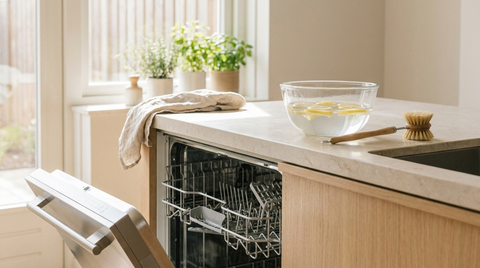
Dishwasher stinks? This is usually the real cause (and this is how you solve it)
A smelly dishwasher is one of those problems that almost makes you feel a little dirty. You open the door and instead of a fresh, clean smell, a musty, sour or even sewer-like smell comes out. It is logical that you think: how can something that cleans itself smell so bad?
The good news is that this is usually not a complicated problem. In most cases, the cause is accumulated food remains, grease, stagnant water or a filter that has not been cleaned for too long. And even better: you can often solve it quite simply.
Why does a dishwasher actually smell?
A dishwasher almost never "just smells". There is usually something building up that you don't immediately see.
The most common causes are:
- A dirty filter: food scraps, grease and dirt get stuck here
- Grease and soap residue in the machine: especially in spray arms, rubbers and pipes
- Standing water: often due to a blockage or poor drainage
- A dirty rubber edge: a surprising amount of gunk collects there
- Wash too often at low temperature: useful for energy, but less good for fat and bacteria
The latter is especially important. If you almost always run at eco or low temperature, fat and residues will dissolve less well. Then a layer of deposits slowly forms in the machine, and it is precisely that layer that starts to stink over time.
This is how you make a smelly dishwasher fresh again
Before you start buying anything, it is best to take these simple steps first.
1. Clean the filter
Remove the filter from the bottom of the dishwasher and rinse it thoroughly under warm water. If necessary, use a soft brush or old dishwashing brush to loosen grease and caked-on residue.
If the filter has not been cleaned for a while, this is often the biggest culprit.
2. Check the spray arms
Food residues and limescale can build up in the holes in the spray arms. As a result, your dishwasher rinses less well and dirt continues to circulate in the machine for longer.
If possible, loosen the spray arms and flush them. You can carefully open clogged holes with a toothpick or skewer.
3. Clean the rubber edge
The edge of the door is one of those places that many people forget. Yet water, grease and dirt often remain here.
Wipe the rubber edge with a damp cloth and a little mild cleaning agent. Pay particular attention to the folds.
4. Run a hot empty wash
A hot empty cycle helps to loosen grease and deposits. Preferably choose the hottest program of your dishwasher.
You can use a machine cleaner, or first work with a simple cleaner as a temporary solution. But if you notice that the smell keeps coming back, then a product that is really intended for machine maintenance is usually a lot more effective.
What works better than home remedies?
You see many tips online with vinegar, baking soda or lemon. And honestly: sometimes that helps a little. Especially if your dishwasher is not yet very dirty.
But with a machine that smells really musty or sewer-like, this is often more of a quick freshener than a real solution. The smell will then return after a few days or weeks.
This is because the problem usually goes deeper: grease, biofilm and dirt in parts of the machine that you cannot easily reach yourself.
That is why a targeted machine cleaner often works better. This tackles contamination throughout the machine, not just what you see on the outside.
If you want to do it right
If your dishwasher often stinks, regular maintenance is really the difference between "just masking it" and actually solving the problem.
For such a thorough cleaning theCosmeau Deep Clean Tabs for Dishwashera logical option. These help to loosen accumulated grease, dirt and unpleasant odors from household machines, so that your machine smells fresher and runs cleaner again.
No sales pitch, just practice: if a machine has not been properly cleaned for some time, a targeted deep clean usually works better than individual kitchen remedies.
How do you prevent your dishwasher from smelling again?
Once the smell is gone, you want it to stay that way.
This really helps:
- Clean the filter weekly or biweekly
- Run a hot program every now and then, even if you normally use eco
- Leave the door slightly ajar after washing
- Remove large food residues before loading the dishes
- Clean your dishwasher regularly as a preventative measure
The combination of low temperatures, lots of grease and little maintenance in particular ensures that odors return.
Frequently asked questions
Why does my dishwasher smell like sewer?
This is usually due to stagnant water, a dirty drain, contamination in the filter or accumulated residues in the machine. Sometimes the cause lies outside the dishwasher itself, for example in the drain pipe.
Does vinegar help with a smelly dishwasher?
Sometimes a little, especially with light scents. But with persistent odors, it is usually not enough to really tackle grease, biofilm and deeper contamination.
How often should you clean a dishwasher?
Light maintenance, such as cleaning the filter, preferably every 1 to 2 weeks. A thorough cleaning of the machine itself ideally about once a month, depending on how often you use it.
In short
A smelly dishwasher usually does not mean that your machine is broken. However, it is dirty in places where you cannot immediately see it. Start with the filter, spray arms and rubber edge. And if the odor keeps coming back, opt for a real deep clean instead of just a quick patch solution.
Then your dishwasher will smell as it should again: simply clean.


 Prices that are accessible for