







Je vaatwasser reinigen zonder agressieve middelen kan prima, zolang je het filter, vet en verborgen vuil op de juiste manier aanpakt.
You want to clean your dishwasher, but not with a half chemical attack in your kitchen. Makes sense. Especially if you are sensitive to strong smells, prefer to clean more calmly or simply have no appetite for harsh cleaners that dominate everything. The good news is that your dishwasher often already becomes a lot fresher without harsh products, as long as you start in the right places.
Short answer: cleaning a dishwasher without harsh chemicals works fine if you first tackle food leftovers, grease and standing dirt. The filter, the rubber seal, the spray arms and a targeted cleaning cycle usually make the biggest difference. So you do not immediately need heavy products, but you do need an approach that goes further than just a quick rinse.
Why does a dishwasher actually get dirty?
A dishwasher seems to keep itself clean, but that is only half true. During every cycle warm water rinses through, but leftovers also stay behind. Think of:
- grease from pans and plates
- food leftovers in the filter
- soap and rinse-aid residues
- limescale and deposits
- moisture in places that dry poorly
That combination means your machine smells less fresh over time and can clean less efficiently. Especially if you often run short eco programmes, that dirt builds up quietly.
What do people mean by harsh chemicals?
They usually mean products with a very strong smell, a caustic action or a composition you would rather not use too generously. Think of extremely degreasing cleaners, heavy chlorine products or all kinds of household mixes that miracle stories circulate about online.
That sometimes feels powerful, but powerful is not always smarter. With a dishwasher you mainly want to loosen dirt and rinse it away, not just add something strong because it sounds impressive.
Where do you start if you want to clean mildly?
If you want to clean without harsh chemicals, always start mechanically. So first look where dirt really sits, and tackle that.
1. Clean the filter properly
This is almost always step one. Take the filter out of the bottom of the dishwasher and rinse it under warm water. Use a soft brush to loosen grease and stuck leftovers.
You often already notice a difference here, because a dirty filter is one of the biggest causes of musty smell in the machine.
2. Include the rubber seal and door
The rubber seal takes a lot of unnoticed wear. Grease, moisture and tiny food leftovers stay there easily. Wipe that seal calmly with a soft cloth and warm water. Do not forget the edges of the door either.
That is such a small step that many people skip, while odour likes to build up right there.
3. Check the spray arms
In the holes of spray arms small leftovers or limescale particles can sit. That means your machine sprays less well and dirt circulates longer. Checking and cleaning them helps more than many people think.
Do vinegar or baking soda always help?
Sometimes a bit, but not always enough. And that is exactly where a lot of confusion comes from. Online it seems as if one cup of vinegar solves every dishwasher problem, but in practice it depends on what is really in your machine.
With light deposits or a starting smell, a simple cleaning cycle can help. But if grease and build-up have already been there for longer, you often do not get deep enough with only a household remedy.
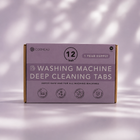
That is why many people eventually choose a targeted solution such as Cosmeau dishwasher deep-clean tablets. Not because mild cleaning is nonsense, but because you sometimes want to clean without harshness, just not halfway.
When is a targeted deep clean smarter?
If you recognise one or more of these signals:
- your dishwasher quickly smells musty again
- glasses come out of the machine dull
- the machine does not feel really fresh inside
- you have already cleaned the filter, but the problem keeps coming back
- you mainly run eco or short programmes
Then the dirt is usually not only on the surface, but also deeper in the system. In that case a targeted clean is often more logical than masking something again and again.
So can you really clean without harsh chemicals?
Yes, absolutely. Only that does not mean you may not use anything effective. It mainly means you choose targeted cleaning instead of using random harsh products.
A smart order is usually:
- clean the filter
- wipe rubber and door
- check spray arms
- run a hot maintenance cycle
- with returning dirt do a targeted deep clean
That is calmer, more practical and often also more effective than improvising with strong products every time.
What helps keep your dishwasher fresh afterwards?
This is often where the real gain is. If you want to prevent having to scrub again and again, these habits help:
- scrape large food leftovers off plates
- clean the filter regularly
- let the machine air now and then
- do not only run short cold or eco programmes
- plan a maintenance cycle now and then
If you also use mild products daily for your dishes, you can also look at Cosmeau dishwasher tablets as a calm basis for your normal routine.
Do not make a big cleaning drama of it
Cleaning a dishwasher without harsh chemicals really does not have to be a complicated project. The biggest mistake is usually not that you clean too mildly, but that you start too late or look in the wrong place.
First tackle the visible dirt, then work deeper, and prefer a targeted clean over a harsh shortcut. That is usually exactly enough to get your machine fresher, calmer and nicer to use again.
FAQ about cleaning a dishwasher without harsh chemicals
Can you clean a dishwasher without chlorine?
Yes. In most cases chlorine is not needed at all. Filter cleaning, manual cleaning and a targeted maintenance cycle often already solve a lot.
Is vinegar always safe for your dishwasher?
Not every part reacts equally happily to frequent use. That is why it is smarter not to blindly trust it as a standard solution.
What if my dishwasher still smells musty despite cleaning?
Then the dirt often sits deeper in the machine. A targeted deep clean is then usually more effective than only wiping the visible parts.
How often should you clean your dishwasher?
That depends on how intensively you use it, but regular short maintenance almost always prevents bigger smell and dirt problems later.