

Response following Keuringsdienst van Waarde
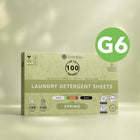
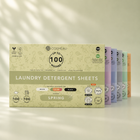
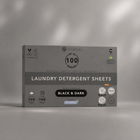
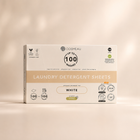
Following the Keuringsdienst van Waarde episode about laundry sheets I would like to respond. Although we were not approached by the editorial team, I did feel the responsibility to explain our story, because Cosmeau also sells laundry sheets and our packaging was shown on screen.
Why was our packaging visible?
Keuringsdienst van Waarde has an old batch of our packaging, because we buy in for months and changes therefore only become visible much later.
Important to emphasise: on our product page we have never without explanation claimed that this is a fully plastic-free detergent. The product pages were updated around the summer. Because PVA biodegradability is a grey area, we have shared multiple perspectives, including those of ECHA (the European Chemicals Agency) and the Plastic Soup Foundation, so customers could make an informed choice themselves. We therefore did not sell this product as ‘plastic-free’ to Keuringsdienst van Waarde.
Very unfortunate that they have old packaging, no contact was made with us to ask for additional information or context.
Transparency about PVA
We have been open for quite some time about the use of PVA and the accompanying uncertainties. On 2 October we shared an extensive post on our socials about this, in which we also indicated that we have already been working on an alternative for months. That message was also shared via our newsletter to customers.
Why have so many people been shocked and angry?
Despite this transparency we receive many angry and sad reactions. I fully understand that.
My estimate is that this is because laundry sheets have for years, by many brands, been positioned as plastic-free. That message has stuck: laundry sheets = plastic-free.
Since the beginning of this year we have consciously no longer advertised with this, as soon as it became clear that this cannot be stated in black and white. We shared that via mailings and socials, but not everyone follows us there actively. For customers who have been buying from us for longer and have not followed this topic since (which is very understandable), this can feel like a shock.
I honestly do not know how we could have communicated this even better. If you have ideas about that, I would like to hear them.
Then the second point: PVA, how does that sit exactly?
Based on studies and tests* from raw-material suppliers, suppliers, and international studies, we always assumed that it would break down fully biologically. We did not take Dutch water treatment plants into account at the time.
We do know that biodegradability of PVA differs per brand and type. We use the Japanese A-brand Kuraray and they have handed over tests in which their PVA is biodegradable.
That is still the case, only under certain conditions that therefore do not always apply in Dutch water treatment plants. This namely depends on the bacteria present, which can differ per plant and region.
When this became clear and it is therefore not the lasting end point we hoped for, we took action immediately. Not only in communication, but also in substance.
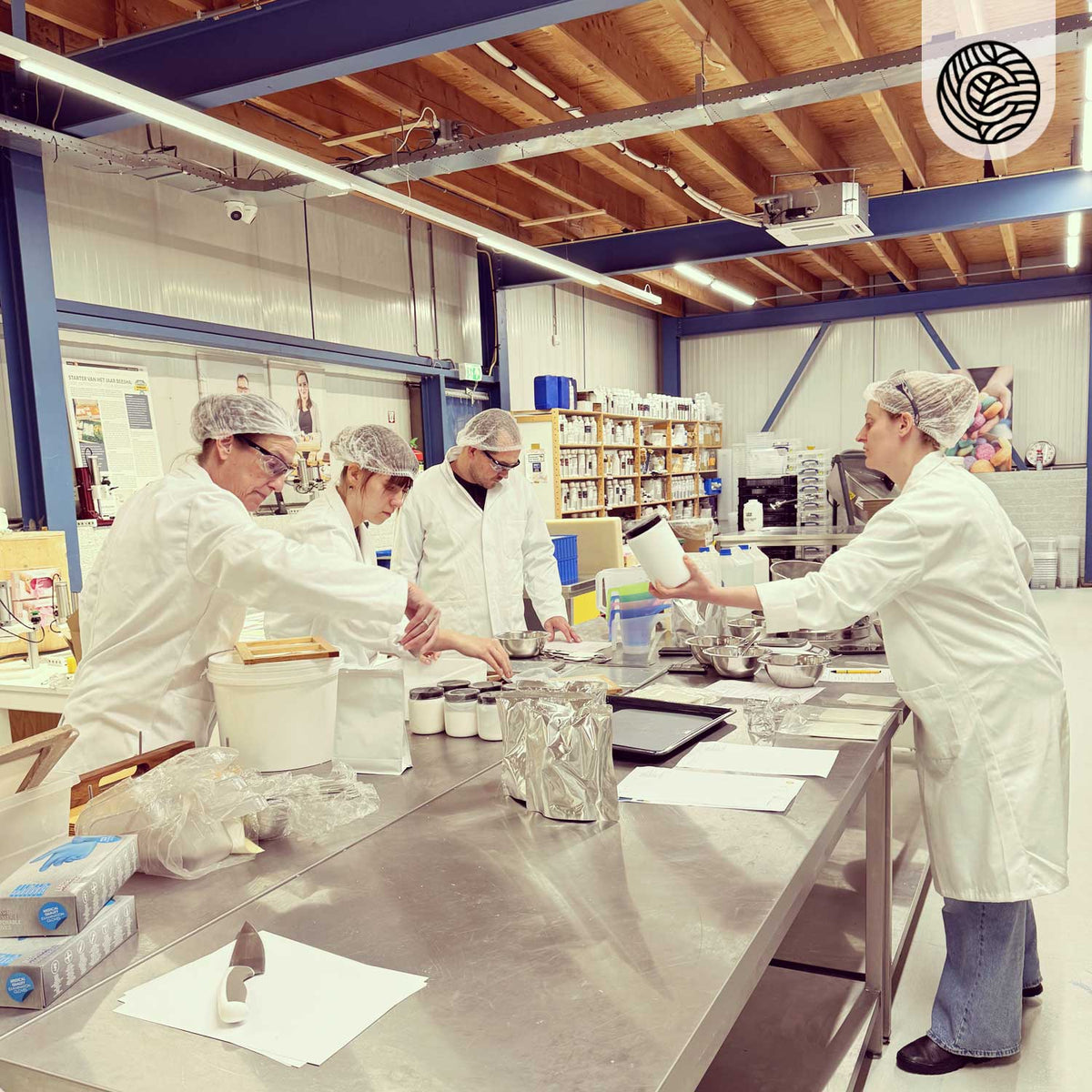
We accelerated our planning and decided to realise our own detergent production a year earlier. As is known we already produce our scent pearls in the Netherlands (without PVA and microplastics), and currently a new production hall of 2.500 m² is being built next to our office.
Our goal is a next-generation detergent that meets all these requirements:
-
· (micro)plastic-free
-
· biodegradable
-
· easy to dose
-
· preferably not liquid
-
· no (recycled) plastic bottle
-
· not as heavy as powder
-
· high wash power
-
· strong scent
-
· scalable with limited means
-
· ingredients largely from the EU
-
· no fabric softener needed (optional)
Such a product does not exist yet, but we are making clear progress. We will keep communicating transparently about that in the coming period.
About the statements in Keuringsdienst van Waarde
In the episode around 14:38 scientist Heather Leslie is interviewed. She states that PVA only breaks down under very specific conditions, with trained micro-organisms and at 60 °C. Then a water treatment plant is spoken with, which creates the picture that PVA does nothing there.
We do not want to call Keuringsdienst van Waarde into question, but this presentation is incomplete** and we are happy to add to it.
Dutch water treatment plants are very modern. PVA also exists in different grades (degree of hydrolysis and molecular weight), and no distinction was made in that in the broadcast. The 60-degree test is a laboratory standard, but not the only way PVA can be broken down**. In the test report* carried out by TüV, biodegradability was established at 90% over 28 days and tested at 22 degrees with 2 degrees variation.
In addition sludge plays an important role. Part of the PVA binds to sludge, which in the Netherlands is incinerated or digested***. That means this part is actually removed from the system.
Another part can, depending on the plant, be partly broken down by bacteria and enzymes. This differs per water treatment plant and is something I am currently researching further. I will come back to this later.
It is true that water treatment plants are not designed to specifically break down PVA. They are set up to remove general organic load, nitrogen and phosphate. PVA breakdown is therefore secondary and incidental, but that does not mean nothing happens.
Bacteria can also co-metabolise substances, change them enzymatically or partly break them down, without using them as main food.
About the “plastic” in the lab
The image in which PVA is heated and forms a plastic-like residue does not reflect how PVA ends up in the environment. It gives the impression that with every wash a piece of plastic is discharged, and that is not correct.
Now that we know all this, what does stay behind?
Our laundry sheet weighs about 1,71 grams, of which 15–35% PVA. In the extreme case it is therefore about 0,6 grams of PVA. Of that, part is destroyed via sludge and possibly part is biologically broken down.
By comparison: this is in the same order of magnitude as the amount of microplastics released when washing one polyester shirt. The important difference is that polyester microplastics are solid fibres that remain and accumulate, while PVA is soluble and less persistent. That does not make PVA ideal, but it does make it less harmful than classic microplastics.
Your gym outfit or the kids' football shirts form a bigger problem if you put this in perspective.
In summary
We thought too easily because ECHA does not see it as a microplastic and it was biodegradable, that we could carry this within our requirements as a brand. Microplastic-free is not the same as plastic-free and we always saw microplastic-free as a higher standard.
Aggressive chemicals in traditional detergents often have a larger impact on water life than PVA. If you look at microplastics then what stays behind is less harmful and also less than a football shirt or your leggings. PVA is not toxic, is partly broken down and partly destroyed via sludge processing. It is not a perfect solution, but also not comparable to dumping solid plastic in the environment.
That does not take away that we want to replace PVA and we are working hard on that, not as a reaction to this episode, but half a year ago since we learned more about this. We communicated this at the time across all our channels, adjusted our advertising, adjusted our packaging and decided to produce detergents ourselves in our new factory hall (completion mid-March 2026) next to our head office in Velsen-Noord.
The expectation is that the first version is available in Q1 2026.
Thank you for reading.
Jason
Explanation (as stated on the product page since summer 2025)
The laundry sheets are, depending on the definition, microplastic-free or not. PVA is approved by ECHA and is not marked there as a microplastic, but by the Plastic Soup Foundation it is. There are studies that show PVA can be biodegradable, depending on type and application. We have a certification according to OECD 301B. Our packaging is fully plastic-free and FSC-certified. In addition we are researching cellulose-based carriers to avoid this grey area.
***How a sewage treatment plant works - Vallei Veluwe
www.brabantsedelta.nl/rioolwaterzuivering
waternet.nl/ons-water/rioolwater/waterzuivering/
www.vechtstromen.nl/werk/zuiveren-afvalwater/werking/
**The water solubility of PVOH depends mainly on its degree of hydrolysis (DH), and to a second extent on its degree of polymerization (DP) (Finch [10]). This is determined by two counteracting influences of the hydroxyl groups. On the one hand, the many hydroxyl groups cause PVOH to have a high affinity to water, which drives water solubility. On the other hand, the strong hydrogen bonding between inter- and intramolecular hydroxyl groups can greatly impede solubility in water. As a consequence, fully hydrolysed PVOH is highly crystalline and only dissolves in hot water (> 60°C), whereas ‘partially hydrolysed’ PVOH is more weakly hydrogen-bonded, less crystalline, and generally soluble in cold water (< 10 °C) (Monosol [16]). Finch [10] shows high water solubility at ambient temperature (20 °C) for PVOH with a degree of hydrolysis up to 90%, but rapidly dropping with further increasing DH. The observed negative effect of an increasing degree of polymerization (in the range of 500– 2500) on solubility was of limited relevance for PVOH with a degree of hydrolysis < 90%. This is illustrated in Figure 2 for a degree of polymerisation of 1750 (after Finch [10]). Note that for practical detergent applications, PVOH films are modified and contain additives, to ensure that they are 100% soluble in cold water (as opposed to what is shown in Figure 2 for pure unmodified
Source
www.mdpi.com/2073-4360/13/21/3742
*Test reports biodegradability:
Raw-material supplier:
https://cosmeau.s3.eu-west-3.amazonaws.com/test_report_kuraray.pdf
Manufacturer TüV test:
https://cosmeau.s3.eu-west-3.amazonaws.com/test_report_tuv2.pdf
OECD-B301 tests always biodegradability under 28 days. Material can continue to break down further, only this is no longer included in the test standard.